


Blog






0102030405
What is the difference between kojic acid and kojic acid dipalmitate?
2026-01-29
In the field of skin whitening and skincare, kojic acid has long been favored for its ability to inhibit tyrosinase activity. However, with the development of cosmetic technology, its derivative—kojic acid dipalmitate (KDP)—has gradually come into the public eye. Many people are curious: what are the differences between the two? Which one is more suitable for my skincare needs? This article will provide an in-depth analysis.
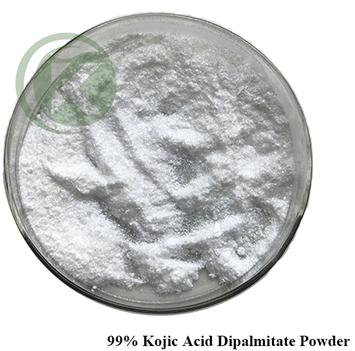
Is kojic acid the same as kojic acid dipalmitate?
The answer is clearly no. Although their names are similar, kojic acid and kojic acid dipalmitate are two different compounds. Kojic acid is a natural fermentation extract with a small molecular weight and good water solubility, but it has poor stability and is prone to oxidation and discoloration.
Kojic acid dipalmitate, on the other hand, is a derivative formed by esterifying kojic acid with two palmitic acid molecules. It has a larger molecular structure, stronger oil solubility, and significantly improved stability and skin permeability. Therefore, the two differ significantly in chemical properties, stability, and application methods.
Kojic acid dipalmitate, on the other hand, is a derivative formed by esterifying kojic acid with two palmitic acid molecules. It has a larger molecular structure, stronger oil solubility, and significantly improved stability and skin permeability. Therefore, the two differ significantly in chemical properties, stability, and application methods.
Kojic Dipalmitate vs Kojic Acid: Key Differences
1. Different Chemical Structures: Kojic acid contains free hydroxyl groups, making it easily oxidized. Kojic acid dipalmitate, on the other hand, protects these hydroxyl groups through esterification, forming a more stable ester structure that is less affected by light, heat, and pH.
2. Differences in Stability: Kojic acid is prone to discoloration and deactivation during storage, especially in alkaline environments. Kojic acid dipalmitate exhibits excellent stability, making it suitable for long-term storage and less prone to degradation.
3. Differences in Solubility: Kojic acid is hydrophilic, making it suitable for water-based formulations; kojic acid dipalmitate is lipophilic, more readily soluble in oils and alcohols, making it suitable for oil-based bases such as creams and serums.
4. Differences in Molecular Weight: Kojic acid has a molecular weight of approximately 142 g/mol, while kojic acid dipalmitate has a molecular weight of approximately 618 g/mol. The larger molecular weight allows it to remain in the stratum corneum more easily, slowly releasing active ingredients.
5.Skin penetration mechanism: Kojic acid dipalmitate itself does not act directly. It needs to be hydrolyzed into kojic acid by skin esterases to achieve "in situ release", which improves bioavailability and mildness.
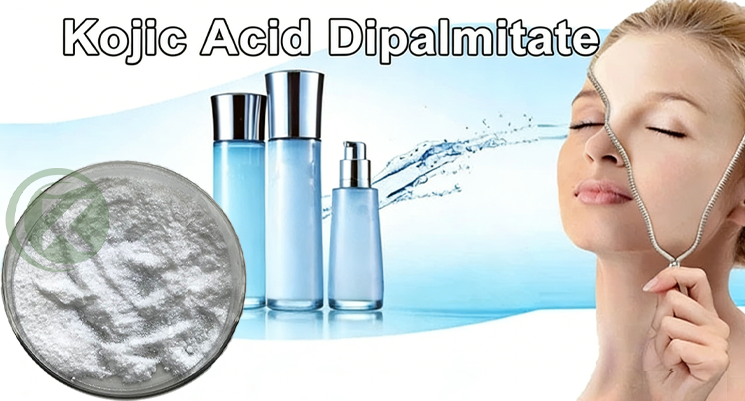
Kojic Dipalmitate vs. Kojic Acid: Benefits for Skin
Kojic Acid Advantages:
Directly inhibits tyrosinase, blocking the melanin production pathway.
Possesses certain antibacterial and Antioxidant capabilities.
Low cost, commonly used in traditional whitening products.
Kojic Dipalmitate Advantages:
Higher stability: Less prone to oxidation and discoloration, longer shelf life.
Better penetration: Lipid-soluble structure allows for easier penetration of the stratum corneum.
Mercerity and lower irritation: Slow release reduces irritation to sensitive skin.
Wideer compatibility: Suitable for various formulations including oil-based products, creams, and nanocarriers.
Long-lasting whitening: Achieves a lasting, even skin tone through continuous kojic acid release.
Studies have shown that kojic dipalmitate performs excellently in delivery systems such as nanoemulsions and liposomes, significantly improving the skin retention time and whitening effect of ingredients, and has low cytotoxicity, making it suitable for long-term use.
Where to buy kojic acid dipalmitate powder for skin?
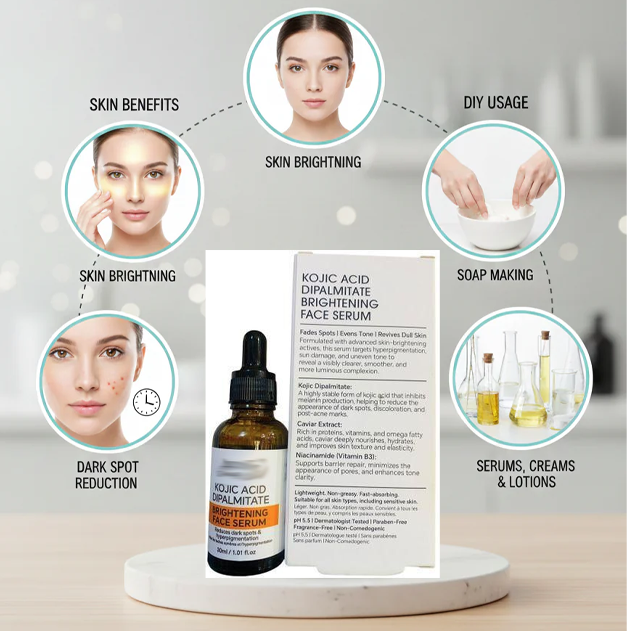
When selecting kojic acid dipalmitate raw materials, finding a professional and reliable supplier is crucial. Kintainutri® possesses a solid research background and a rigorous quality control system, enabling it to provide high-purity (99%) powder products that meet cosmetic raw material standards. Whether you are a small or medium-sized cosmetic brand or a large manufacturer, you can obtain suitable raw material solutions, providing a solid guarantee for subsequent product development and ensuring that whitening ingredients have a "safe and effective" foundation from the source.
In conclusion, Kojic acid dipalmitate powder, an upgraded derivative of kojic acid, is becoming an important active ingredient in modern whitening skincare products due to its excellent stability, permeability, and gentleness.